0. Quick Overview
ISO 29461 is the international standard for air intake filter systems of rotary machinery – specifically gas turbines, turbocompressors, large reciprocating engines and other turbomachinery. It defines test methods and performance classifications for filters operating under conditions that are fundamentally different from those in building ventilation: high face velocities, pulsating airflow, salt-laden marine atmospheres, desert sand storms, arctic fog and continuous self-cleaning cycles. The standard was developed under ISO Technical Committee 142 (Cleaning Equipment for Air and Other Gases) and is the first ISO standard written from the ground up for turbomachinery inlet filtration.
Unlike ISO 16890 (general HVAC ventilation filters) or EN 1822 / ISO 29463 (HEPA and ULPA filters), ISO 29461 addresses the very specific demands of machinery protection: catastrophic consequences if a filter fails or collapses, continuous exposure to aggressive environmental contaminants, and the need for reliable mechanical efficiency under real-world operating conditions rather than laboratory-only performance.
Current editions of the standard:
| Standard / Part | Content | Current Edition |
|---|---|---|
| ISO 29461-1 | Static filter elements – efficiency, dust holding capacity, classification | 2021 (2nd edition, Sept. 2021) |
| ISO 29461-2 | Filter element endurance test in fog and mist environments | 2022 |
| ISO 29461-3 | Mechanical integrity of filter elements (burst test) | 2024 (July 2024) |
| ISO 29461-4 | Test methods for static filter systems in coastal and offshore environments | 2025 (April 2025) |
| ISO 29461-5 | Requirements for air intake systems for turbomachinery (system-level) | In development |

Air intake filters to ISO 29461 protect gas turbines against particle ingestion, erosion and fouling – in power generation, offshore and industrial applications worldwide.
1. Background and Origins: Why Turbomachinery Needed Its Own Standard
Before ISO 29461, no international standard existed specifically for turbomachinery air intake filters. Engineers specifying inlet filtration for gas turbines were forced to cross-reference standards designed for entirely different applications: ISO 16890 (and its predecessor EN 779) for general ventilation, EN 1822 / ISO 29463 for cleanroom-grade HEPA filters, and ASHRAE 52.2 for the North American HVAC market. None of these standards addressed the unique operating conditions of turbomachinery – and applying them to gas turbine inlet filtration produced misleading results.
The problem is fundamental: general ventilation filters are tested at low face velocities (typically 0.25 m/s) in controlled laboratory conditions. Gas turbine inlet filters, by contrast, operate at face velocities of 1.5 to 3.0 m/s and are exposed to rain, fog, salt spray, sand storms, hydrocarbon contamination and extreme temperature swings – simultaneously. Filters that perform well in an ISO 16890 test rig may fail catastrophically in a turbine air intake under real-world conditions.
The consequences of filter failure in turbomachinery are severe. Particle ingestion causes compressor blade erosion, fouling of turbine vanes, blockage of cooling passages, and in extreme cases, compressor surge and unplanned shutdown. A single fouling event on a large industrial gas turbine can cost hundreds of thousands of euros in lost output, fuel penalty and maintenance. Offshore, the stakes are even higher – filter collapse on an FPSO or offshore platform can damage equipment worth tens of millions.
The impetus for ISO 29461 came from major gas turbine OEMs (GE, Siemens, Mitsubishi Heavy Industries) and leading filter manufacturers who recognised that a dedicated standard was essential. Development began under ISO TC 142, and the first edition of Part 1 was published in 2013. However, this initial version did not include a classification system and saw limited adoption. The decisive step came with the second edition in September 2021, which introduced the comprehensive T-classification system (T1–T13) and established ISO 29461 as a practical tool for specifying and comparing turbomachinery inlet filters worldwide.
2. Structure of the Standard – All Five Parts Explained
Part 1: Static Filter Elements – Efficiency and Dust Holding Capacity (ISO 29461-1:2021)
Part 1 is the core of the standard. It defines test methods for determining the filtration efficiency and dust holding capacity of static (non-self-cleaning) filter elements used in turbomachinery air intakes. The second edition of 2021 introduced the T-classification system – a unified framework of 13 efficiency classes from T1 to T13 that spans the entire range from coarse pre-filtration to HEPA-grade final filtration.
A critical innovation of ISO 29461-1 is its approach to electrostatic charge. Many synthetic filter media carry an electrostatic charge from the manufacturing process that temporarily boosts measured efficiency. In building ventilation this effect may persist for a useful period; in turbomachinery applications, where filters face high velocities, moisture, oil mist and aggressive contaminants, the charge dissipates rapidly. ISO 29461-1 therefore measures mechanical efficiency – the true, charge-independent performance of the filter medium – providing a far more reliable prediction of actual field performance than standards that permit the electrostatic contribution to be included.
The dust loading procedure uses ISO 12103-1 A2 Fine Test Dust (Arizona road dust) with a standardised loading protocol. The first 100 grams of dust (or 15 Pa pressure rise, whichever comes first) determines the initial gravimetric arrestance. Filters are then loaded to a final pressure drop of 375 Pa for coarse filters (T1–T4) or 625 Pa for fine and high-efficiency filters (T5–T13), at which point dust holding capacity is determined.
Part 2: Endurance Test in Fog and Mist Environments (ISO 29461-2:2022)
Part 2 addresses a challenge unique to turbomachinery: water ingress. Gas turbine air intakes routinely encounter fog, mist, rain, and in offshore or coastal environments, salt-laden water droplets. Standard HVAC filter tests do not account for these conditions – yet the presence of water fundamentally changes filter behaviour. Wet filters exhibit increased pressure drop, reduced particle holding capacity and, in severe cases, media collapse or bypass.
ISO 29461-2 specifies an endurance test under controlled fog and mist conditions. The filter element is subjected to a defined water loading regime while airflow is maintained at representative turbine inlet velocities. The pressure drop must remain below 1,000 Pa throughout the test. This part also introduces an optional hydrophobic rating for filter media that are designed to repel water – a critical property for offshore and coastal installations where salt fog is a continuous challenge.
Part 3: Mechanical Integrity of Filter Elements (ISO 29461-3:2024)
Published in July 2024, Part 3 fills an important gap: the structural strength of filter elements under extreme pressure loads. In turbomachinery, sudden changes in ambient conditions (e.g. compressor surge, rapid power ramp-up, passage of a weather front) can generate pressure spikes across the filter bank that far exceed normal operating pressure drop. If a filter element ruptures or collapses, unfiltered air enters the engine with potentially catastrophic consequences.
The burst test specified in ISO 29461-3 subjects the filter element to a maximum test pressure of 6,250 Pa (approximately 25 inches water gauge) and evaluates whether the element maintains its structural integrity. This test is particularly important for compact V-bank filters and cartridge filters used in high-velocity intake systems, where the mechanical demands on the filter frame, media pack and seal are extreme.
Part 4: Static Filter Systems in Coastal and Offshore Environments (ISO 29461-4:2025)
Published in April 2025, Part 4 is the newest addition to the standard and specifically targets the harshest operating environment for turbomachinery filters: coastal and offshore installations. Gas turbines on FPSO vessels, offshore platforms, coastal power plants and LNG terminals operate in atmospheres saturated with sub-micron salt particles, high humidity and periodic heavy rainfall.
ISO 29461-4 defines test methods for evaluating filter performance under these conditions, including ultra-fine salt particle loading (mostly sub-micron NaCl aerosol), variable humidity cycles that simulate daily environmental variations, and heavy rainfall simulation. The standard addresses the specific failure mode of salt crystallisation within the filter medium – where salt particles absorbed during high-humidity periods crystallise as humidity drops, creating irreversible blockage and pressure drop increase.
Part 5: Requirements for Air Intake Systems for Turbomachinery (in development)
Part 5, currently under development within ISO TC 142, will take a system-level perspective. While Parts 1–4 focus on individual filter elements and their performance under specific test conditions, Part 5 will define requirements for complete air intake filter assemblies – including filter housings, multi-stage filtration configurations, drainage systems, weather protection and the interaction between different filter stages. This part is expected to provide guidance for specifying and evaluating entire air intake systems rather than individual components.
3. The T-Classification System – Filter Classes T1 to T13
The T-classification introduced in ISO 29461-1:2021 is a unified framework that assigns turbomachinery inlet filters to one of 13 performance classes. It bridges the gap between existing standards by referencing ISO 16890 test methods for classes T1–T9 and ISO 29463 (MPPS) methods for classes T10–T13. This eliminates the need to cross-reference multiple standards when specifying turbine filters – a major simplification for engineers and procurement professionals.
| T-Class | Category | Minimum Efficiency | Test Method Reference | Comparable To |
|---|---|---|---|---|
| T1 | Coarse Dust | A100 = 20–50 % | ISO 16890 | ISO Coarse |
| T2 | Coarse Dust | A100 ≥ 50 % | ISO 16890 | ISO Coarse |
| T3 | Coarse Dust | A100 ≥ 70 % | ISO 16890 | ISO Coarse / ePM10 |
| T4 | Coarse Dust | A100 ≥ 85 % | ISO 16890 | ISO ePM10 |
| T5 | ePM10 | ePM10 ≥ 50 % | ISO 16890 | ISO ePM10 50 % |
| T6 | ePM2.5 | ePM2.5 ≥ 50 % | ISO 16890 | ISO ePM2.5 50 % |
| T7 | ePM1 | ePM1 ≥ 50 % | ISO 16890 | ISO ePM1 50 % |
| T8 | Fine Dust | ePM1 ≥ 70 % | ISO 16890 | ISO ePM1 70 % |
| T9 | Fine Dust | ePM1 ≥ 85 % | ISO 16890 | ISO ePM1 85 % |
| T10 | EPA | MPPS ≥ 85 % | ISO 29463 | EN 1822 E10 |
| T11 | EPA | MPPS ≥ 95 % | ISO 29463 | EN 1822 E11 |
| T12 | EPA | MPPS ≥ 99.5 % | ISO 29463 | EN 1822 E12 / H13 |
| T13 | HEPA | MPPS ≥ 99.95 % | ISO 29463 | EN 1822 H13 / H14 |
Key distinction: Unlike ISO 16890, which reports both the initial efficiency (including any electrostatic contribution) and the discharged efficiency, ISO 29461 classifies filters based on mechanical efficiency only. Charged synthetic media that appear as ePM1 85 % under ISO 16890 may only reach T7 or T8 under ISO 29461, because the electrostatic contribution is excluded. This is a deliberate design choice – in turbomachinery environments, the electrostatic charge on filter media dissipates rapidly due to moisture, oil mist, high face velocities and vibration, making the mechanical efficiency the only reliable predictor of long-term performance.
4. Test Methods and Performance Parameters in Detail
Test Aerosols and Dust Standards
ISO 29461 specifies several test contaminants, each selected to replicate conditions encountered by turbomachinery filters in the field:
| Test Contaminant | Standard | Application in ISO 29461 |
|---|---|---|
| A2 Fine Test Dust (Arizona dust) | ISO 12103-1 | Primary test dust for efficiency and dust holding capacity (Parts 1, 3) |
| L2 Synthetic Loading Dust | ISO 15957 | Dust loading and capacity determination |
| DEHS (Diethylhexyl Sebacate) | ISO 29463 | Liquid aerosol for efficiency testing of high-grade filters (T10–T13) |
| KCl (Potassium Chloride) | ISO 16890 | Solid test aerosol for fractional efficiency testing (T1–T9 classes) |
| NaCl (Sodium Chloride) | ISO 29461-4 | Ultra-fine salt aerosol for coastal and offshore performance testing |
| Water fog / mist | ISO 29461-2 | Fog endurance and hydrophobic performance testing |
Pressure Drop and Loading Endpoints
The dust loading test measures both efficiency progression and dust holding capacity as the filter accumulates contaminant. ISO 29461 defines two final pressure drop endpoints, depending on the filter class:
| Filter Classes | Final Pressure Drop | Dust Loading Protocol |
|---|---|---|
| T1–T4 (Coarse Dust) | 375 Pa | ISO 12103-1 A2 dust, 100 g initial loading |
| T5–T13 (Fine Dust, EPA, HEPA) | 625 Pa | ISO 12103-1 A2 dust, 100 g initial loading |
| Fog / Mist Endurance (Part 2) | < 1,000 Pa (pass criterion) | Controlled water fog at representative face velocity |
| Burst Test (Part 3) | 6,250 Pa (max. test pressure) | Structural integrity at 25″ w.g. |
These endpoint values are significantly higher than those used in ISO 16890 (where coarse filters are typically loaded to 200 Pa), reflecting the harsher operating conditions and longer service intervals expected in turbomachinery applications. The 100 g initial dust loading (compared to 30 g in ISO 16890) also provides a more representative picture of the filter's efficiency development over its service life.
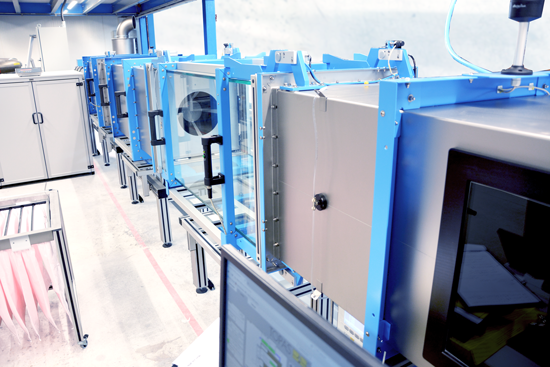
HS-Luftfilterbau GmbH operates an in-house test rig for air intake filters to ISO 29461, enabling individual performance verification for gas turbine and turbomachinery applications.
5. Ambient Environment Categories and Operational Challenges
Gas turbines and compressors operate in vastly different environments around the world. ISO 29461 recognises this diversity through its multi-part structure, where different parts address specific environmental challenges:
| Environment | Key Contaminants | Critical Challenges | ISO 29461 Part |
|---|---|---|---|
| Coastal / Offshore | Sub-micron sea salt, salt fog, rain, high humidity | Salt crystallisation in media, corrosion, hygroscopic particle growth | Part 4 (2025) |
| Desert / Arid | Silica sand, mineral dust, extreme temperature swings | High dust concentration, abrasion, rapid filter loading, thermal stress | Part 1 (dust efficiency), Part 3 (burst) |
| Tropical / Humid | Fog, mist, high humidity, biological contamination | Water saturation, media collapse, microbial growth, pressure spike | Part 2 (fog/mist endurance) |
| Industrial / Urban | Soot, hydrocarbons, sulphates, fine particulate matter | Sub-micron particle penetration, chemical degradation of media | Part 1 (fine dust classes T7–T13) |
| Arctic / Cold Climate | Ice crystals, freezing fog, low-temperature condensation | Ice formation on media, freeze-thaw cycling, increased pressure drop | Part 2 (fog), Part 3 (mechanical integrity) |
The multi-part approach allows specifiers to combine test results from different parts of ISO 29461 to build a complete performance profile for any given installation site. A gas turbine filter for an offshore platform in the North Sea, for example, would need to demonstrate acceptable performance under Part 1 (dust efficiency), Part 2 (fog endurance), Part 3 (mechanical integrity) and Part 4 (salt loading). This comprehensive, environment-specific approach is unique to ISO 29461 and has no equivalent in general ventilation filter standards.
6. Filter Types in Scope
ISO 29461 covers the full range of filter technologies used in turbomachinery air intake systems. Different parts of the standard apply to different filter types and configurations:
| Filter Type | Description | ISO 29461 Part | Typical T-Class |
|---|---|---|---|
| Static bag / pocket filters | Multi-pocket synthetic or glass-fibre media filters; primary pre-filtration stage in most multi-stage systems | Part 1 | T5–T9 |
| Compact V-bank filters | Rigid, V-shaped pleat packs in plastic or metal frames; high efficiency in compact dimensions | Parts 1, 3 | T7–T13 |
| Cylindrical cartridge filters | Pleated cartridges for self-cleaning pulse-jet systems; designed for automated reverse-pulse dust removal | Parts 1, 2, 3 | T4–T9 |
| Panel / flat filters | Flat pre-filter panels; weather louver inserts and first-stage coarse separation | Part 1 | T1–T4 |
| EPA / HEPA final filters | High-efficiency glass-fibre or PTFE media filters; final stage in multi-stage systems for critical applications | Parts 1, 3 | T10–T13 |
| Self-cleaning pulse-jet systems | Automated reverse-pulse cleaning removes accumulated dust during operation; no turbine shutdown required | Parts 1, 2, 3 | T4–T9 |
| Inertial pre-separators | Vane-type or spinner-tube separators; remove large particles, water droplets and sand by centrifugal force | Part 1 (pre-filter stage) | T1–T3 |
| Coalescing / mist eliminators | Specialised elements for removing water and oil aerosols from the air stream before the main filter stage | Part 2 | – |
In practice, gas turbine air intake systems almost always use multi-stage filtration. A typical configuration might consist of weather louvers and inertial pre-separators (first stage), followed by static bag or pocket filters (second stage) and compact V-bank or EPA/HEPA final filters (third stage). In dusty or sandy environments, self-cleaning pulse-jet systems often replace or supplement the second stage. ISO 29461 provides the test framework for each individual stage as well as – once Part 5 is published – the complete system.

HS-Mikro Pak 4V GT compact filters installed in a gas turbine inlet filter housing – designed and tested to ISO 29461. More about gas turbine filtration at luftfilterbau.de.
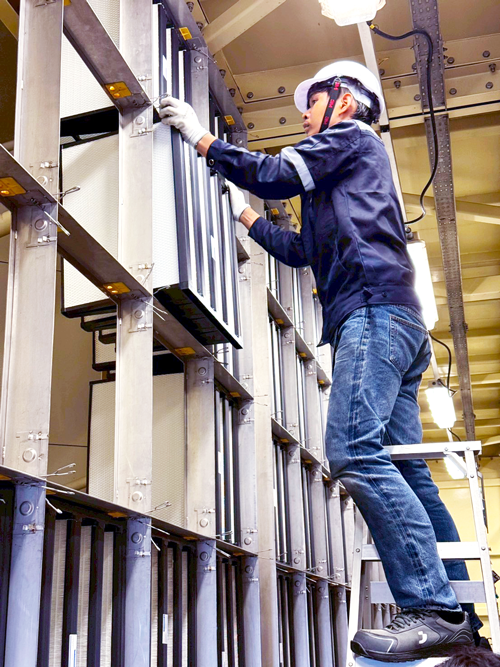
An HS-Luftfilterbau GmbH service technician replacing an HS-Mikro Pak 4V GT filter at a gas turbine installation. Correct filter specification and timely replacement are critical to turbine availability and thermal efficiency under ISO 29461.
7. Applications – Where ISO 29461 Is Used
ISO 29461 applies wherever rotary machinery requires clean intake air and filter failure can cause significant economic or safety consequences:
Gas Turbines – Power Generation
Large-frame gas turbines in combined-cycle and simple-cycle power plants are the primary application for ISO 29461. These machines ingest enormous volumes of air – a modern heavy-duty gas turbine draws up to 700 kg/s of air at full load. Even trace concentrations of sub-micron particles cause compressor blade fouling, reducing thermal efficiency and power output by several percentage points within weeks. ISO 29461 provides the test framework to ensure that inlet filters maintain consistent, reliable particle removal throughout their service life.
Offshore and Coastal Installations
Gas turbines on offshore platforms, FPSO vessels, LNG terminals and coastal power plants face the most demanding filtration challenge: continuous exposure to salt-laden marine air with humidity levels that cause hygroscopic particle growth and salt crystallisation. ISO 29461-4 (2025) directly addresses this environment. Multi-stage systems with coalescing pre-separators, self-cleaning pulse-jet filters and high-efficiency final stages are standard. HS-Luftfilterbau GmbH supplies complete filter solutions for offshore gas turbines, including self-cleaning systems and salt-resistant compact filters.
Turbocompressors and Process Air
Large centrifugal and axial compressors in the oil and gas industry, petrochemical processing and pipeline compression rely on clean intake air to prevent impeller erosion and bearing contamination. ISO 29461 provides the relevant test and classification framework for these applications, where filter operating conditions closely parallel those of gas turbines.
Marine Propulsion
Gas turbine-powered naval vessels and commercial ships require air intake filtration that can withstand continuous salt spray, high humidity and sea-state-induced water ingestion. ISO 29461 Parts 2 and 4 are particularly relevant for marine propulsion applications.
Offshore Wind Energy
While wind turbines are not gas turbines, the nacelle and gearbox ventilation systems of large offshore wind turbines face similar environmental challenges – salt fog, high humidity, limited access for filter changes. The environmental testing methodology of ISO 29461-4 is increasingly referenced for offshore wind applications.
Industrial Gas Turbines and Engines
Mechanical drive gas turbines in oil and gas production, gas compressor stations, and large reciprocating engines in power generation and marine applications all benefit from ISO 29461-compliant filtration. The standard's emphasis on mechanical efficiency and environmental resilience is equally relevant for these machines.
8. ISO 29461 Compared to Related Standards
The following table provides a detailed comparison of ISO 29461 with the most important related filtration and machinery standards:
| Standard | Scope | Key Difference to ISO 29461 |
|---|---|---|
| ISO 16890 | General ventilation filters (HVAC) | Tests at low face velocity (~0.25 m/s); includes electrostatic contribution; 30 g initial dust load; final Δp 200 Pa. Not representative of turbomachinery conditions. |
| EN 1822 / ISO 29463 | HEPA and ULPA filters (cleanrooms, pharma, nuclear) | Covers high-efficiency filters only (E10–U17 / ISO 15E–ISO 75U). No environmental testing (rain, fog, salt). Referenced by ISO 29461 for T10–T13 efficiency testing. |
| ASHRAE 52.2 | General ventilation (North America) | MERV rating system (MERV 1–20). Tests at low velocity, U.S.-focused, no turbomachinery-specific provisions. No environmental endurance testing. |
| ISO 12103-1 | Test contaminants (Arizona road dust) | Defines the primary test dust used in ISO 29461-1 for efficiency and dust holding capacity testing. |
| ISO 15957 | Synthetic loading dust | Defines supplementary test dust for dust loading procedures in ISO 29461. |
| API 616 | Gas turbines for petroleum, chemical, gas industry | Specifies general requirements for gas turbines in process applications, including inlet air quality. References filtration but does not define filter test methods. |
| API 617 | Centrifugal compressors and expanders | Specifies machinery requirements for compressors. Inlet air quality is referenced but filter testing is outside scope. |
| ISO 3977 | Gas turbines – procurement | General gas turbine procurement standard; references air intake quality requirements but does not define filter test methods. |
| ISO 19859 | Gas turbine applications – power generation | Requirements for gas turbines in power generation; complementary to ISO 29461 for air intake specifications. |
The unique value of ISO 29461: It is the only international standard that combines filtration efficiency testing, environmental endurance testing (fog, salt, rainfall), mechanical integrity testing and a unified classification system – all specifically designed for the operating conditions of rotary machinery. No other standard provides this comprehensive, turbomachinery-specific framework.
9. Related Standards and Regulations
ISO 29461 is embedded in a broader network of standards and regulations relevant to turbomachinery design, operation and maintenance:
| Standard / Regulation | Topic / Relation to ISO 29461 |
|---|---|
| ISO 16890 | General ventilation filters – test methods referenced by ISO 29461 for T1–T9 classification |
| ISO 29463 / EN 1822 | HEPA and ULPA filters – test methods referenced by ISO 29461 for T10–T13 classification |
| ISO 12103-1 | Test contaminants (A2 Fine Test Dust) – primary test dust for ISO 29461 efficiency testing |
| ISO 15957 | Synthetic loading dust – supplementary test dust for dust holding capacity measurement |
| ISO 14644-1 | Cleanroom classification – defines ambient cleanliness classes; relevant for turbomachinery intake air quality targets |
| API 616 / API 617 | Gas turbines and compressors for petroleum and gas industry – reference inlet air quality and filtration requirements |
| ISO 3977 | Gas turbines – procurement; general requirements including air intake specifications |
| ISO 19859 | Gas turbine applications – power generation requirements |
| IEC 60034 | Rotating electrical machines – relevant for air-cooled generators and motors requiring filtered intake air |
| ATEX Directive 2014/34/EU / IECEx | Explosion protection – relevant for filtration systems in hazardous areas (oil and gas, petrochemical) |
| NFPA 850 | Fire protection for electric generating plants – includes requirements for gas turbine air intake protection |
| ISO 19906 | Arctic offshore structures – environmental specifications relevant to ISO 29461-4 applications |
HS-V-Pak GT Pulse 90 – Self-Cleaning Turbine Pre-Filter
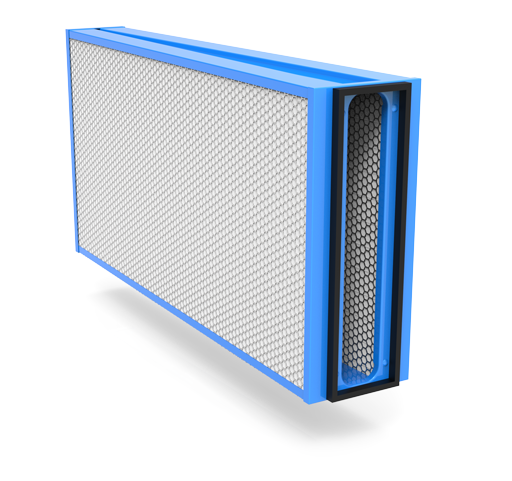
The HS-V-Pak GT Pulse 90 is a self-cleaning V-bank compact filter designed for gas turbine and turbomachinery air intake systems. Its integrated pulse-jet cleaning removes dust and salt deposits continuously during operation – without shutting down the turbine. Ideal for offshore, desert and high-dust environments. Tested to ISO 29461.
- Gas Turbine & Offshore Filters – HS-Luftfilterbau
- Buy filters – luftfilter.kaufen
- ISO 16890 – General Ventilation Filters
- ISO 29463 – HEPA & ULPA Filters
- ISO 29461 at ISO.ORG
- Technical consultation & enquiry
Further Information
HS-AirSynErgy 88/95 – High-Efficiency Turbine Bag Filter
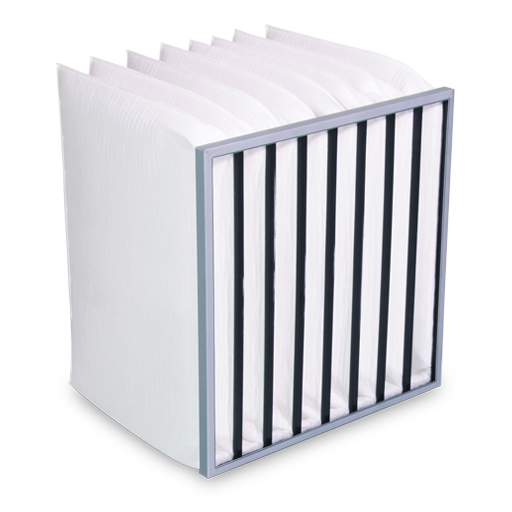
Glass-fibre-free synthetic bag filters for gas turbine and turbomachinery inlet filtration. The wave-structure media delivers outstanding efficiency at low pressure drop, extending turbine service intervals. Available up to ISO ePM1 95 %. Meets ISO 29461 performance requirements.
HS-Luftfilterbau GmbH
Leading manufacturer of air filters for HVAC, ventilation, cleanroom and industrial technology, based in Kiel, Germany. In-house ISO 29461, ISO 16890 and EN 1822 / ISO 29463 test laboratory. Certified to ISO 9001, ISO 14001 and KTA 3601.
- Gas turbine & compressor inlet filters
- Self-cleaning pulse-jet filter systems
- Bag filters ISO ePM1 up to 95 %
- HEPA/ULPA E10–U17 to EN 1822
- Custom filters for offshore, pharma & nuclear